




DIY Knife – Full Tang Fixed Blade for Custom Knife Making
The DIY Knife is designed for knife makers, custom product workshops, private-label businesses, outdoor equipment brands, wholesalers, distributors, and hobby-oriented customers who want control over the final appearance of a fixed-blade knife. This is not an end product with a permanently installed grip, pre-determined finish, and retail presentation, but rather a versatile blade platform that can be developed into a highly personalized finished product.
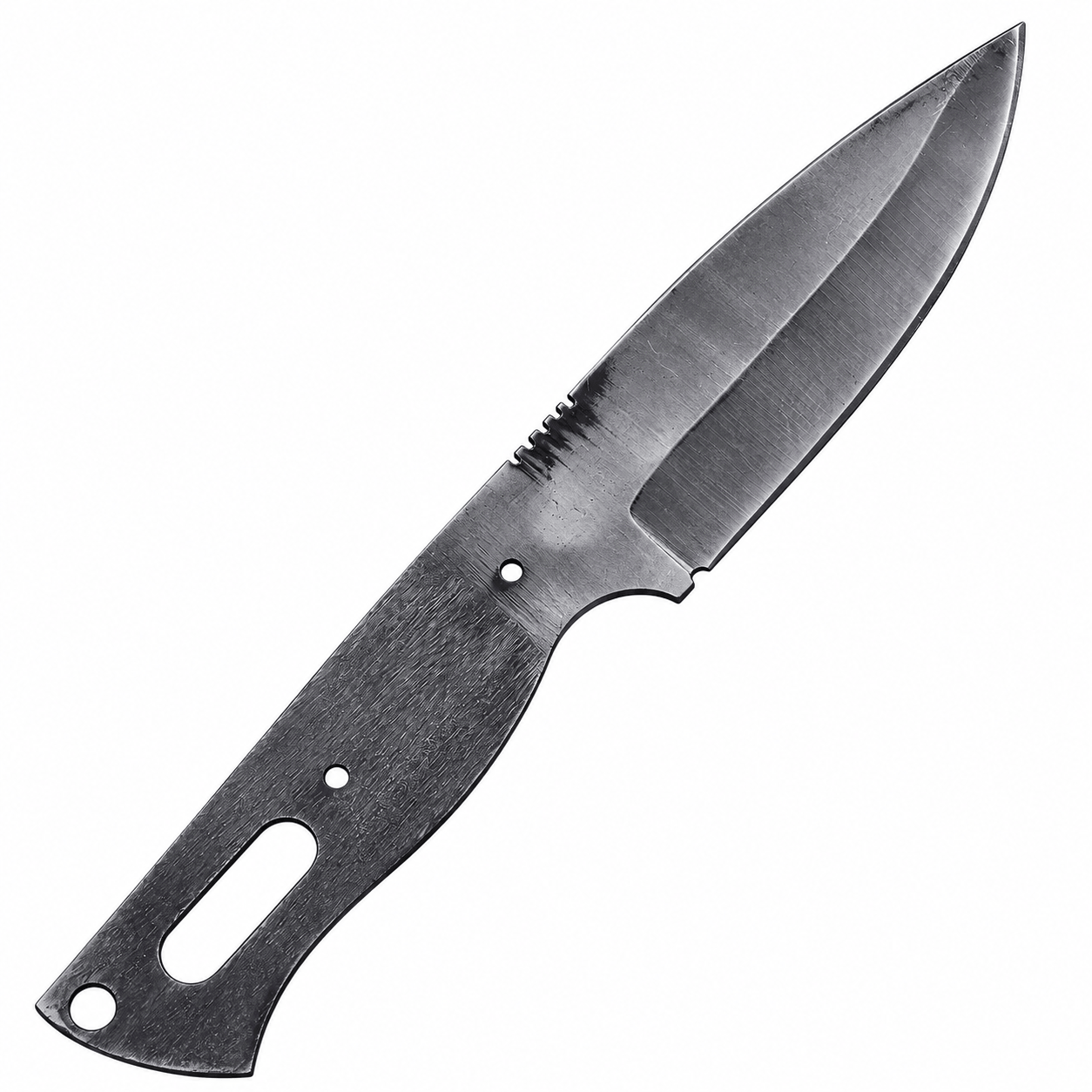
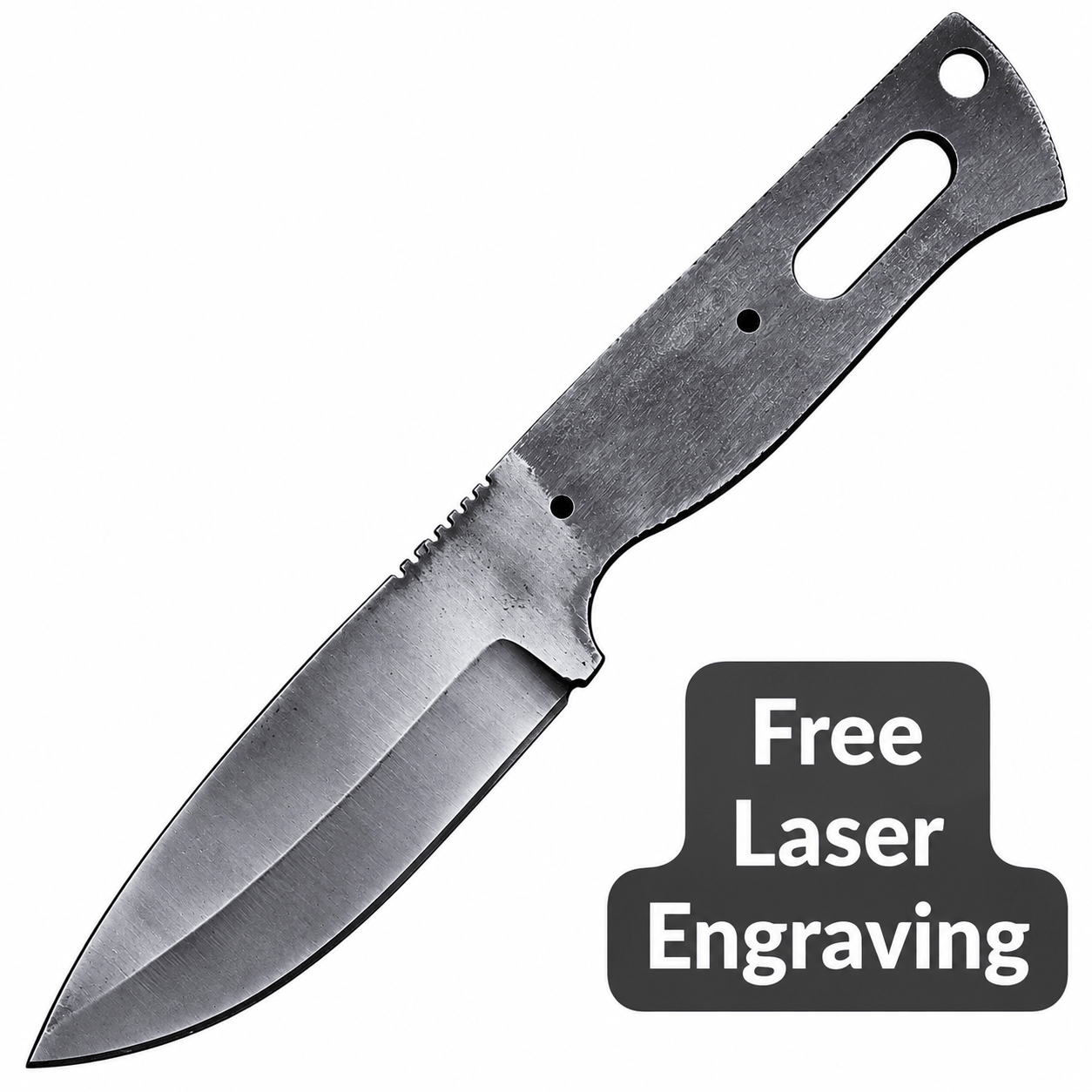
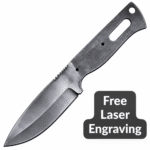
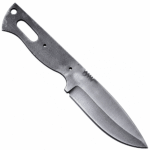
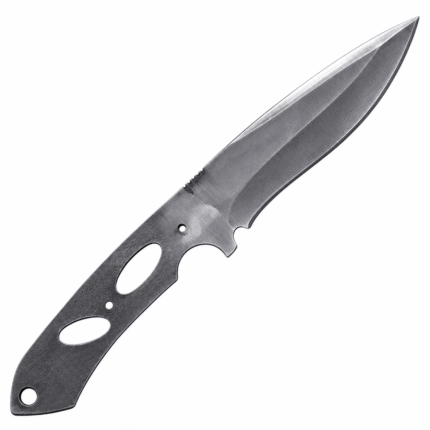
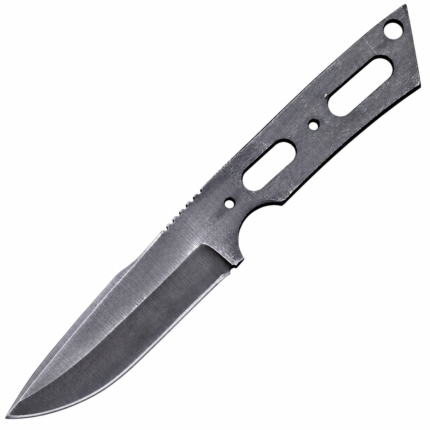
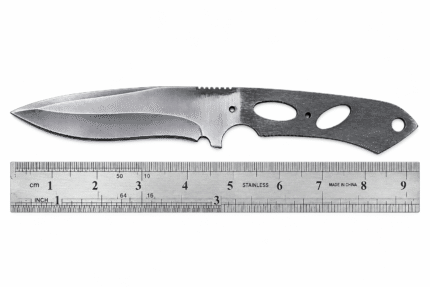
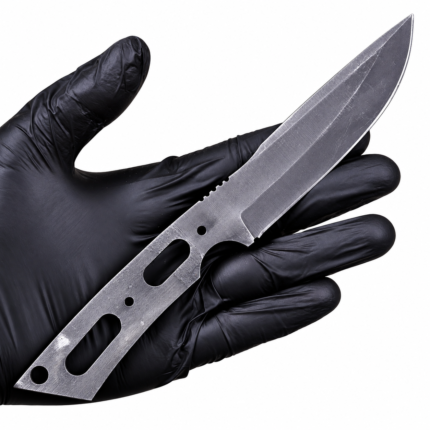
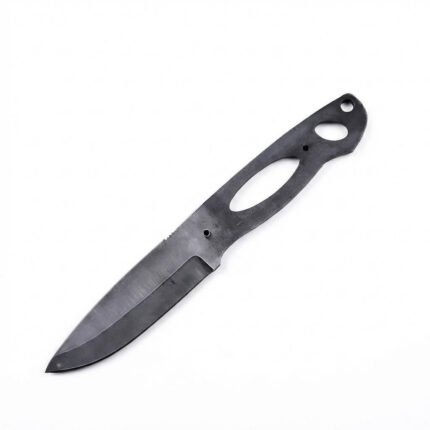
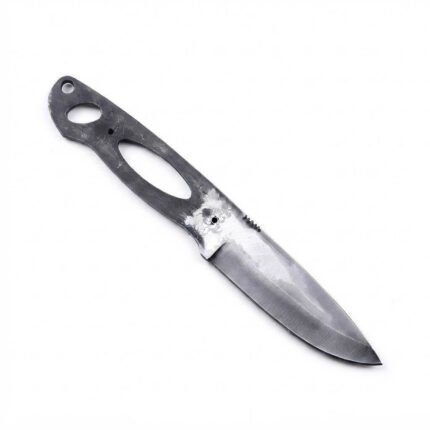
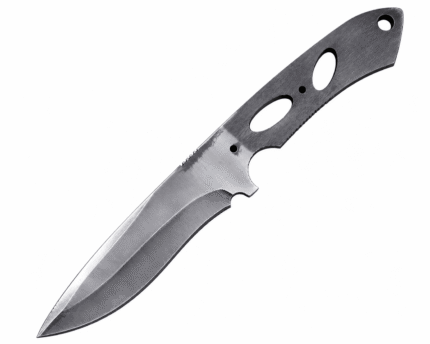
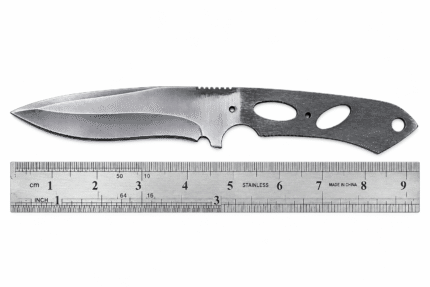
It combines a broad fixed blade plus a full-tang-style handle area, which is open for further customization. The exposed tang includes multiple mounting points and an elongated opening, which allows makers and brands to experiment with different handle configurations, materials, textures, colors, and finishing methods. This is a DIY Knife that can support many different product concepts without the need for a completely new blade design for every variation.
A traditional knife maker can install polished hardwood scales and a satin blade finish. A contemporary outdoor brand can opt for dark composite handle materials with minimalist engraving. A private-label company can develop a complete branded product by providing custom scales, logo engraving, model identification, retail packaging, and product inserts. The same basic platform can therefore serve hobby, custom, wholesale, and commercial product-development requirements.
A Customizable Platform for Knife-Making Projects
The main advantage of a DIY Knife is customization freedom.
With a conventional finished knife, most important aesthetic decisions have already been made by the manufacturer. The handle material, grip shape, finish, branding, and packaging are all typically fixed by the time a customer receives the product.
A DIY-oriented blade platform provides a different experience.
The main metal structure has already been formed, but the buyer still has control over a substantial part of the final product development. The handle area can be modified visually, different grip materials can be installed, the metal surface can be finished differently, and branding can be applied according to individual requirements.
This creates significantly more flexibility for makers who want to create something unique rather than simply reselling a generic finished product.
For commercial buyers, this is equally valuable because it provides room to develop a recognizable product identity.
Full Tang Design For Custom Handle Development
The DIY Knife offers a full-tang-style structure, meaning the metal body continues through the handle section rather than terminating immediately behind the blade.
This exposed tang can be the basis for the finished grip.
The design provides a clear metal platform where custom scales or other handle treatments can be installed according to the desired appearance. Because the handle structure is visible before finishing, makers can plan scale dimensions, contours, fastening positions, and overall styling.
This feature is particularly valuable for custom knife makers who want to create their own handle profile rather than work around a pre-installed factory grip.
The full-tang format also creates a visual continuity between the blade and handle, reinforcing the clean, workshop-oriented appearance of the product.
Broad Fixed Blade Profile
The blade of the DIY Knife has a broad profile with a defined bevel and pointed front section. This provides the product with a substantial and recognizable silhouette.
Its blade surface can also provide space for decorative and commercial customization.
Depending on the finish and available surface area, buyers may consider:
– Company logos
– Product names
– Model codes
– Collection names
– Custom lettering
– Decorative artwork
– Serial-style numbering
– Private-label identification
– Promotional markings
These details can help turn a relatively simple blade platform into a finished product with a stronger identity. The original design emphasizes the suitability of the broad blade for branding and decorative treatment. Any OEM projects can also discuss the final dimensions, blade geometry, finish, and related details according to the manufacturing feasibility.
Designed For Creative Handle Customization
One of the most important areas of customization on a DIY Knife is the handle.
Changing the grip material can completely transform the visual character of the product.
Natural wood may provide a traditional handmade appearance, whereas composite materials can offer a modern, technical look. Synthetic scales may be desirable for consistent commercial production, whereas wrapped configurations can support a more minimal or workshop-inspired aesthetic.
Possible handle options can include:
– Natural hardwood
– Walnut
– Maple
– Stabilized wood
– Layered wood
– Composite materials
– Resin-based scales
– Synthetic grip panels
– Textured handle scales
– Custom-colored inserts
– Decorative spacers
– Cord wrapping
– Branded scales
– Engraved grip components
The original product concept provides support for a broad range of handle materials and finishes, which makes it especially useful for makers who want to differentiate from mass-produced products.
Handle Mounting Points
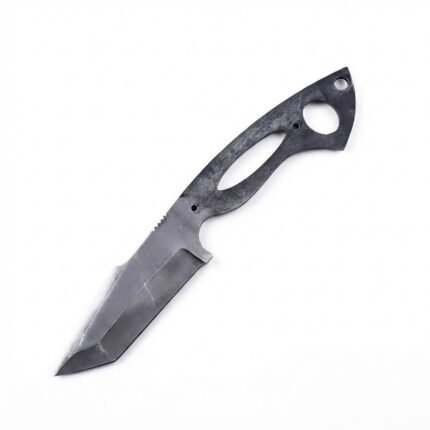
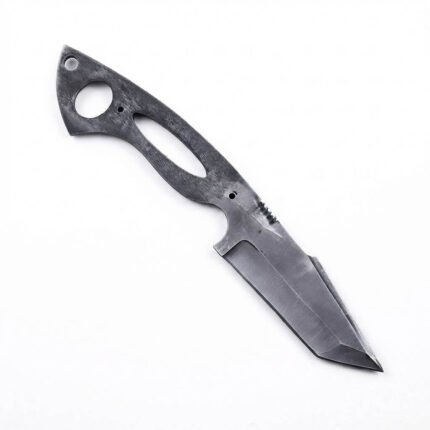
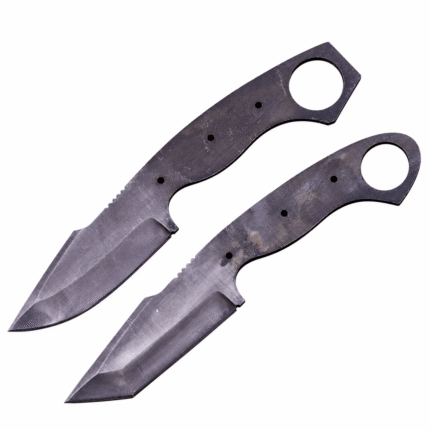
The tang of the DIY Knife includes several holes and openings that can be incorporated into the final handle design. These details can support different mounting approaches and give the maker options when positioning scales or decorative components.
The elongated opening can be hidden completely under a full set of handle scales or deliberately left partially visible as part of the final design. This allows the same DIY Knife to support both conventional and more creative handle styles. A maker may opt for a clean two-scale configuration for a traditional finish, whereas another may develop a layered handle that leaves portions of the metal visible. The structural design therefore becomes part of the design language rather than simply a functional feature.
DIY Knife For Handmade Projects
Although this product is optimized around the keyword DIY Knife, it also fits naturally within handmade knife projects. The exposed tang, visible blade geometry, and unfinished handle platform give the maker considerable influence over how the finished product looks. A custom maker can refine the appearance through processes such as hand sanding, surface refinement, handle shaping, and scale contouring. They can also polish, decorate, engrave, or create custom grips and packaging. The original product description specifically positions this blade platform as suitable for handcrafted development and finishing work. This makes it a useful option for businesses looking to offer an artisan-inspired product without developing every structural element from raw material.
Custom Surface Finishes
One of the biggest effects on the final appearance of a DIY Knife is the surface finishing. A single blade design can look completely different depending on how the metal is treated.
Possible finish concepts may include:
– Satin finish
– Brushed finish
– Polished finish
– Matte finish
– Darkened finish
– Stonewashed-style finish
– Forged-style appearance
– Custom coating
A satin finish can create a clean professional appearance which is suitable for retail collections, whereas a brushed finish may reinforce the workshop-inspired character. A darker treatment can create a more rugged outdoor appearance, whereas a polished surface can support premium or presentation-oriented product lines. The original specification identifies several of these finishing directions as potential customization options.
For commercial product development, the finish selection should ideally be coordinated with the handle material and packaging.
Laser Engraving and Custom Branding
Laser engraving provides another way to personalize the DIY Knife. Suitable areas of the metal surface can be used for branding, product identification, or decorative details.
Possible engraving applications include:
– Company name
– Brand logo
– Product name
– Model number
– Collection title
– Initials
– Custom artwork
– Serial-style numbering
– Promotional text
– Private-label markings
Laser engraving is also an option for B2B buyers who want to visually associate the product with their company without requiring a major structural redesign.
For bulk orders, artwork can be reviewed before production to determine suitable dimensions, line thickness, and placement.
The original product concept already identifies laser engraving as a core customization option for commercial orders.
Private Label DIY Knife
The DIY Knife is well suited for private-label development. Private labeling allows a company to start with an existing blade platform and create a finished product under its own brand identity.
A complete private-label program may combine custom engraving, handle material selection, brand-specific colors, custom model name, SKU creation, product labels, barcode placement, custom packaging, information cards, care instructions, and branded photography.
When these elements are combined, the finished product becomes much more distinctive than a generic unbranded blade. The existing description also positions this model for private-label branding through engraving, handle selection, packaging, labels, and supporting retail materials.
OEM Development Opportunities
For buyers who want more than surface-level customization, OEM development may also be possible.
An OEM project can begin with customer-supplied information such as technical drawings, product sketches, dimensions, existing models, reference samples, CAD references, branding files, and packaging specifications.
Possible areas for modification can include blade dimensions, tang profile, handle geometry, mounting-hole positions, finishing, branding, handle materials, and packaging.
The existing product specification explicitly supports these types of OEM inputs and customization areas.
For more complex projects, it may be useful to develop and approve a sample before proceeding with larger production quantities.
Ideal For Custom Knife Makers
A custom knife maker may prefer to spend more time on creative finishing than on forming every structural component from raw material. The DIY Knife provides a useful middle ground. The blade and tang are already shaped, allowing the maker to focus more heavily on handle design, scale selection, surface finishing, decorative treatment, branding, presentation packaging, and other aspects. This improves development efficiency without eliminating the opportunity for meaningful customization. The original product description similarly identifies the product as suitable for makers who want to concentrate on finishing and personalization.
Suitable For Hobby Projects
Hobby-oriented buyers may also appreciate the customization freedom of this design. A DIY project can be more engaging when the buyer has the opportunity to select materials, develop a handle concept, and influence the appearance of the final result.
Possible hobby handle materials may include walnut, maple, synthetic grip panels, colored resin, layered materials, cord wrapping, and decorative spacers.
This provides the project with a more personal character and allows the finished knife to reflect the maker’s own design preferences.
Suitable For Outdoor Product Brands
Outdoor product companies can use the DIY Knife as a base for their own collections. Instead of developing a completely new blade design, the company can select a specific handle material, finish, engraving style, and packaging format and apply these choices consistently across production. This can simplify the product development while still creating a recognizable branded item. The final product can be positioned within lawful outdoor, camping, utility, field, or collection-oriented ranges. The original description also identifies the outdoor brands as an appropriate commercial market for the product.
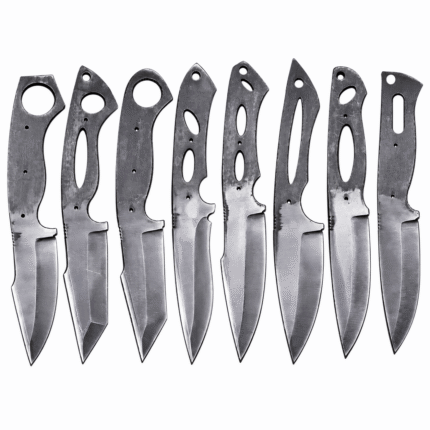
Multiple Handle Styles From One Blade Platform
One of the most important commercial advantages of a customizable DIY Knife is that the same core blade can be turned into several product variations.
For example:
Classic Wood Edition
Natural hardwood scales combined with a satin or brushed blade finish.
Modern Composite Edition
Dark composite scales with minimalist engraving and contemporary packaging.
Maker Edition
Bare or partially finished tang supplied for further customization.
Premium Edition
Decorative hardwood or layered handle materials combined with premium presentation packaging.
Private Label Edition
Customer logo engraving, custom grip materials, labels, SKU information, and branded box.
This strategy enables a business to expand its product catalogue without developing completely separate blade geometries for every version.
Custom Packaging For DIY Knife Products
Packaging can further differentiate the finished product.
Once the DIY Knife has been completed with the selected handle and finish, it can be paired with packaging that reflects the intended market position.
Possible solutions may include:
– Printed retail boxes
– Kraft-style cartons
– Branded sleeves
– Protective inserts
– Custom product cards
– Barcode labels
– Care instructions
– Custom stickers
– Presentation packaging
The existing product description already includes many of these options as part of its customization strategy.
A premium handle material may be paired with a presentation box, whereas a maker-oriented version may use more simple workshop-style packaging.
Wholesale DIY Knife Supply
The DIY Knife can also support wholesale and bulk purchasing requirements.
Potential buyers can include knife workshops, outdoor equipment companies, private-label brands, retailers, wholesalers, distributors, importers, e-commerce businesses, sporting goods companies, and custom product developers.
These B2B customer groups are part of the intended commercial positioning of the product.
Wholesale customers can select the level of completion they require.
Some may purchase the blade platform for their own finishing, whereas others may request handle installation, engraving, selected finishes, and branded packaging.
Different Levels Of Product Completion
A key advantage of this DIY Knife is that it can support different stages of completion.
One buyer may prefer a basic platform with an unfinished handle section, whereas another may request a partially completed model. A private-label customer may require installed scales, custom engraving, selected finish, branded packaging, product label, barcode, and information card. The variations are already contemplated in the product’s bulk-production positioning. This flexibility makes the product useful across several different business models.
Product Development For New Brands
For a start-up brand, creating a completely new knife from the ground up can be an unnecessary complexity. Design, prototyping, tooling, technical testing, manufacturing setup, and packaging development can all raise the workload for the first product launch. Starting with an existing DIY Knife platform allows the company to focus more heavily on customer-facing differentiation. This may include handle design, branding, logo, surface finish, product naming, packaging, photography, and product story. The source description also highlights these elements as a more efficient route for start-up product development.
Product Development For Established Brands
Established businesses may approach the same product differently. They may already have brand guidelines, standard packaging formats, preferred handle materials, product naming systems, color palettes, SKU structures, and logo placement requirements. For these buyers, the DIY Knife can be modified to fit within an existing product family. Where manufacturing capabilities permit, adjustments may be made to the blade, tang, handle opening layout, surface treatment, branding, and packaging.
Strong Visual Product Identity
The blade profile and exposed handle area create a visually distinctive product even before final customization.
The design includes:
– Broad blade body
– Defined point
– Visible tang
– Elongated handle opening
– Multiple mounting points
– Contrasting metal textures
These features can be highlighted through professional product photography.
For an e-commerce listing or B2B catalogue, useful images may include:
– Full side profile
– Blade close-up
– Handle close-up
– Mounting-hole details
– Finished wood-handle example
– Composite-handle example
– Engraving close-up
– Packaging presentation
The original content recommends these kinds of visual views specifically to demonstrate customization potential.
Clear E-Commerce Product Presentation
A successful DIY Knife listing should clearly communicate the customization concept. Customers should understand what is included in the product and which elements may require further finishing or selection.
The primary image should accurately show the blade and tang. Secondary images can then demonstrate different handle materials, engraving options, surface finishes, and packaging concepts.
For B2B websites, an additional OEM or Request a Quote section can explain larger customization projects. This presentation approach is also recommended in the original description.
Product Photography For Custom Knife Listings
Clean product photography can significantly improve the presentation of this type of product.
A white background is particularly effective for the primary image because it allows the blade geometry, bevel, tang, and handle openings to remain clearly visible.
Secondary product photography may highlight:
– Blade finish
– Handle material
– Engraving
– Scale installation
– Packaging
– Finished variations
The source description also recommends white-background product photography and detailed secondary images for this product.
Quality Control For Commercial Orders
For wholesale and private-label production, consistent quality control is important.
Inspection may focus on:
– Overall dimensions
– Blade profile
– Tang alignment
– Surface condition
– Grind consistency
– Mounting-hole position
– Finish uniformity
– Engraving placement
– Packaging condition
These are the same principal quality-control areas identified in the existing description.
For customized orders, an approved reference sample can also help maintain consistency throughout a larger production batch.
Multiple Commercial Versions From One Design
A single DIY Knife platform can be used to create several commercial variants.
For example:
Traditional Edition
Natural wood handle with a satin finish.
Modern Edition
Dark composite scales with minimalist branding.
Maker Edition
Bare tang supplied for additional customer customization.
Premium Edition
Higher-grade handle material with decorative finishing and presentation packaging.
Private Label Edition
Custom logo, grip material, retail box, product label, brand-specific artwork.
The original product concept explicitly supports these types of variations from one blade platform.
This strategy can be commercially efficient as it creates product diversity while keeping the core blade design consistent.
Ideal For Private Label Collections
Private-label brands often need products that are recognizable but do not require completely unique manufacturing architecture.
The DIY Knife works well for this approach.
The basic blade can remain the same while visible customer-facing elements are customized.
These may include:
– Handle
– Color
– Finish
– Engraving
– Product name
– Packaging
– Labels
This approach is already central to the private-label positioning of the product.
The result is a product that can feel brand-specific without requiring every structural component to be redesigned.
Suitable For Professional B2B Buyers
The DIY Knife can serve multiple commercial customer types. Potential buyers can include: knife brands, knife-making workshops, outdoor equipment brands, sporting-goods companies, e-commerce businesses, and custom product developers. All of these B2B customer groups are part of the intended commercial positioning of the product.
Reviews
There are no reviews yet.