



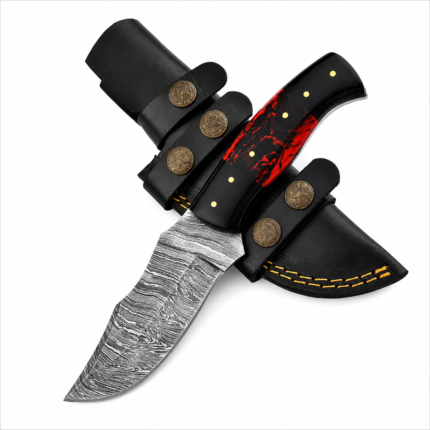
Full Tang Knife Blanks for Custom Knife Making
The foundation of a custom knife starts with the reliability of a strong blade, and the pre-shaped steel blade blanks found on offer are ideal for knife makers looking to create unique, finished products. The variety of blade and handle shapes mean that makers can create distinctive knives without needing to fabricate every blade shape from raw steel stock.
Each blank features a one-piece construction that continues the blade form across the handle section, and this provides a practical basis for incorporating wood, synthetic, composite, resin, micarta-style or other suitable handle scales according to the desired finished design.
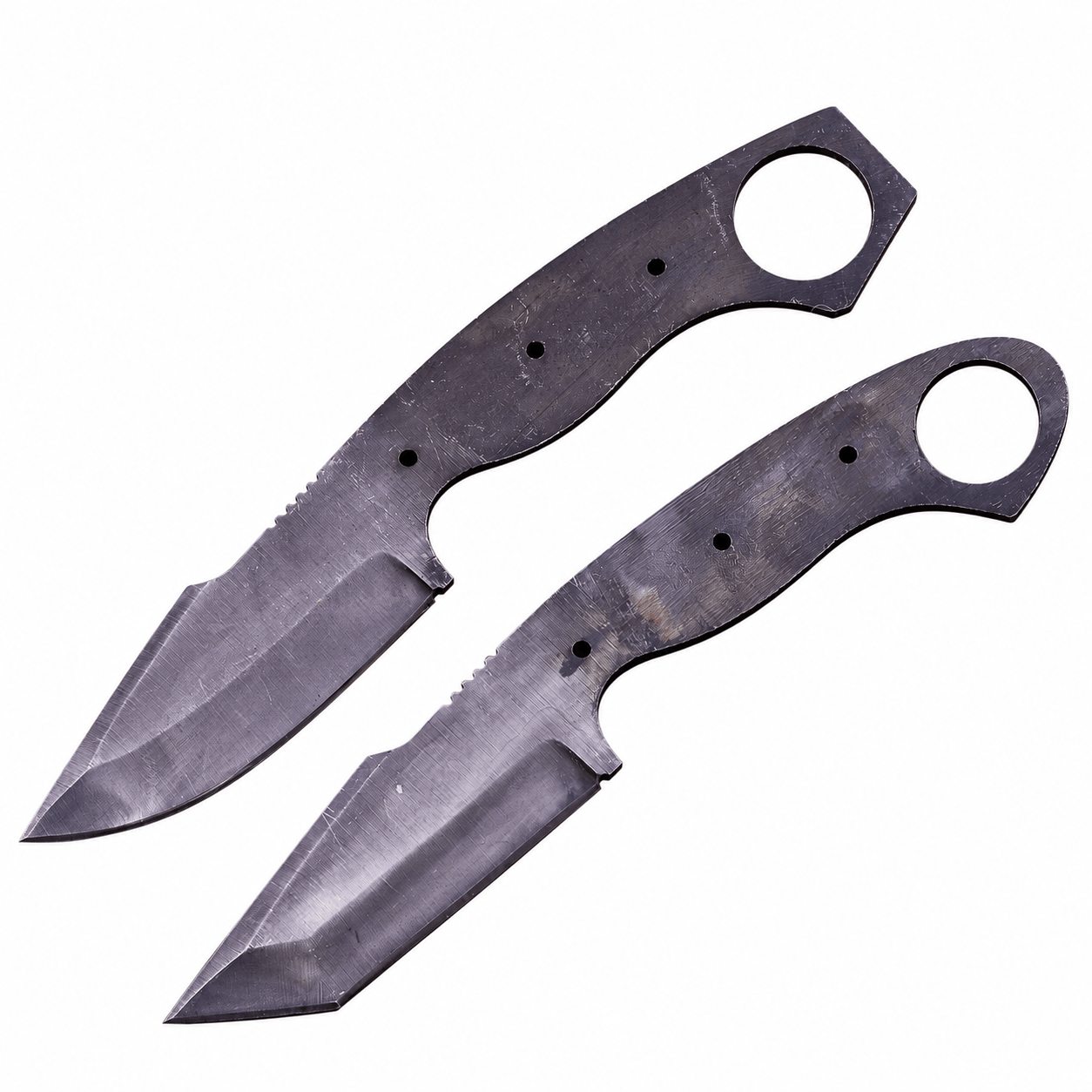
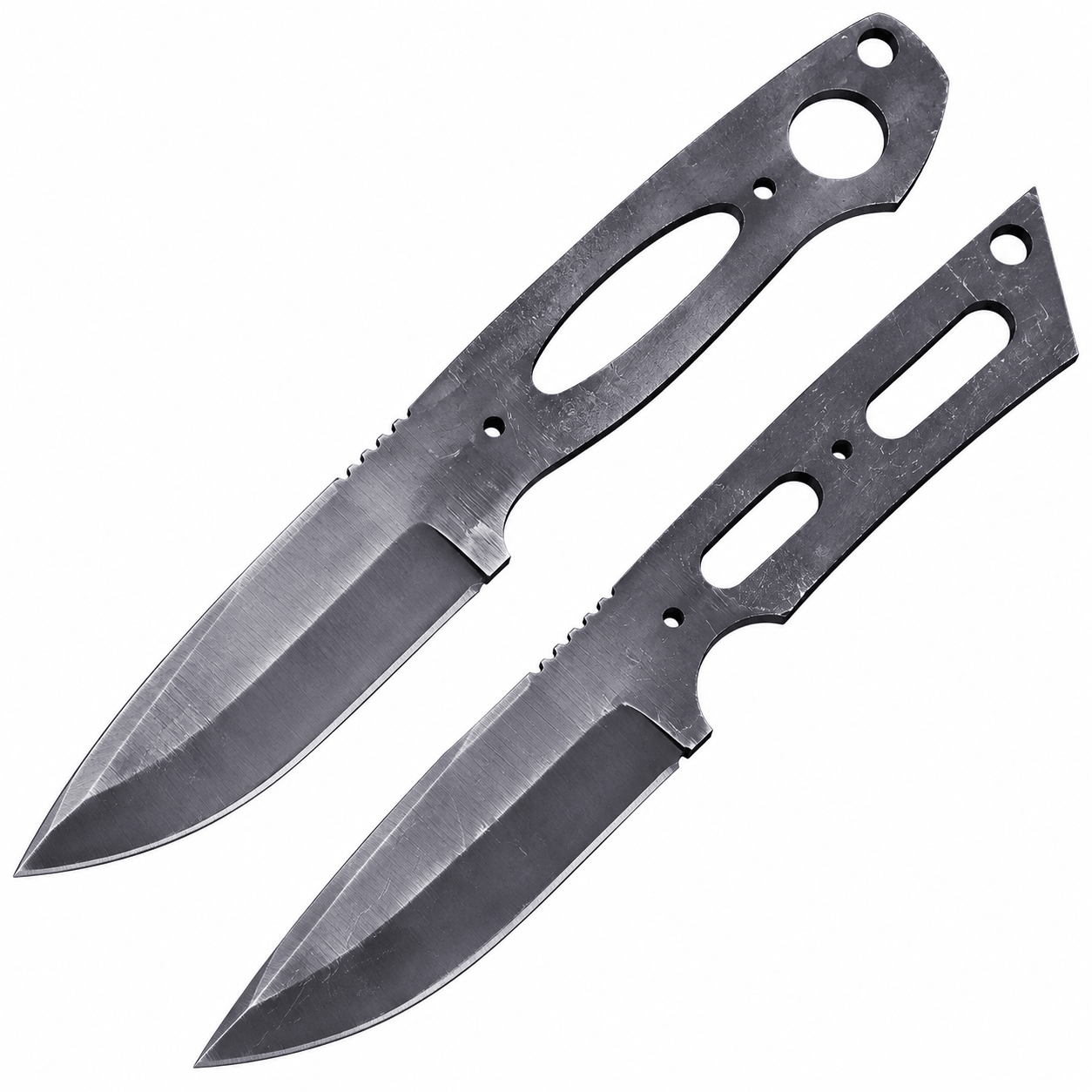
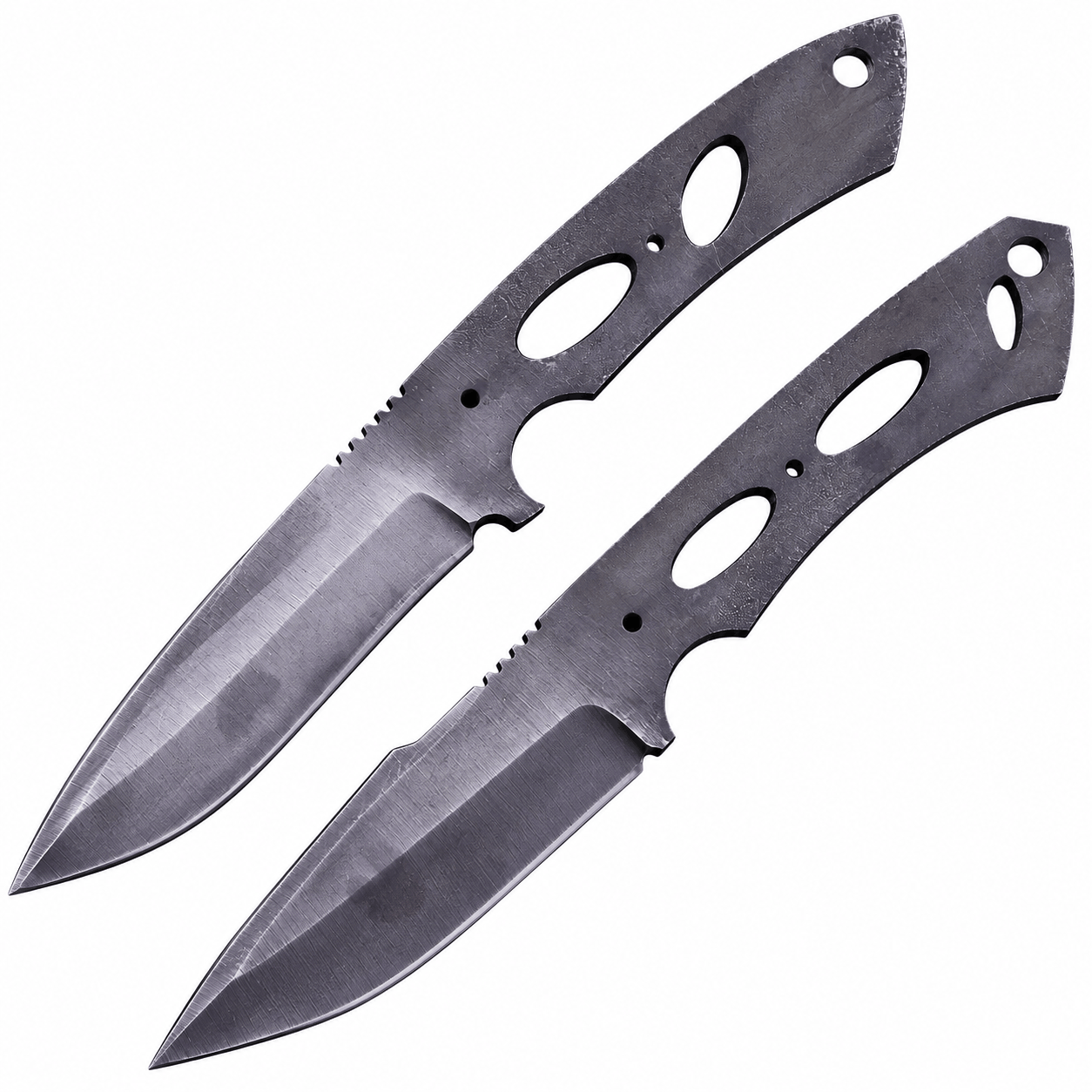
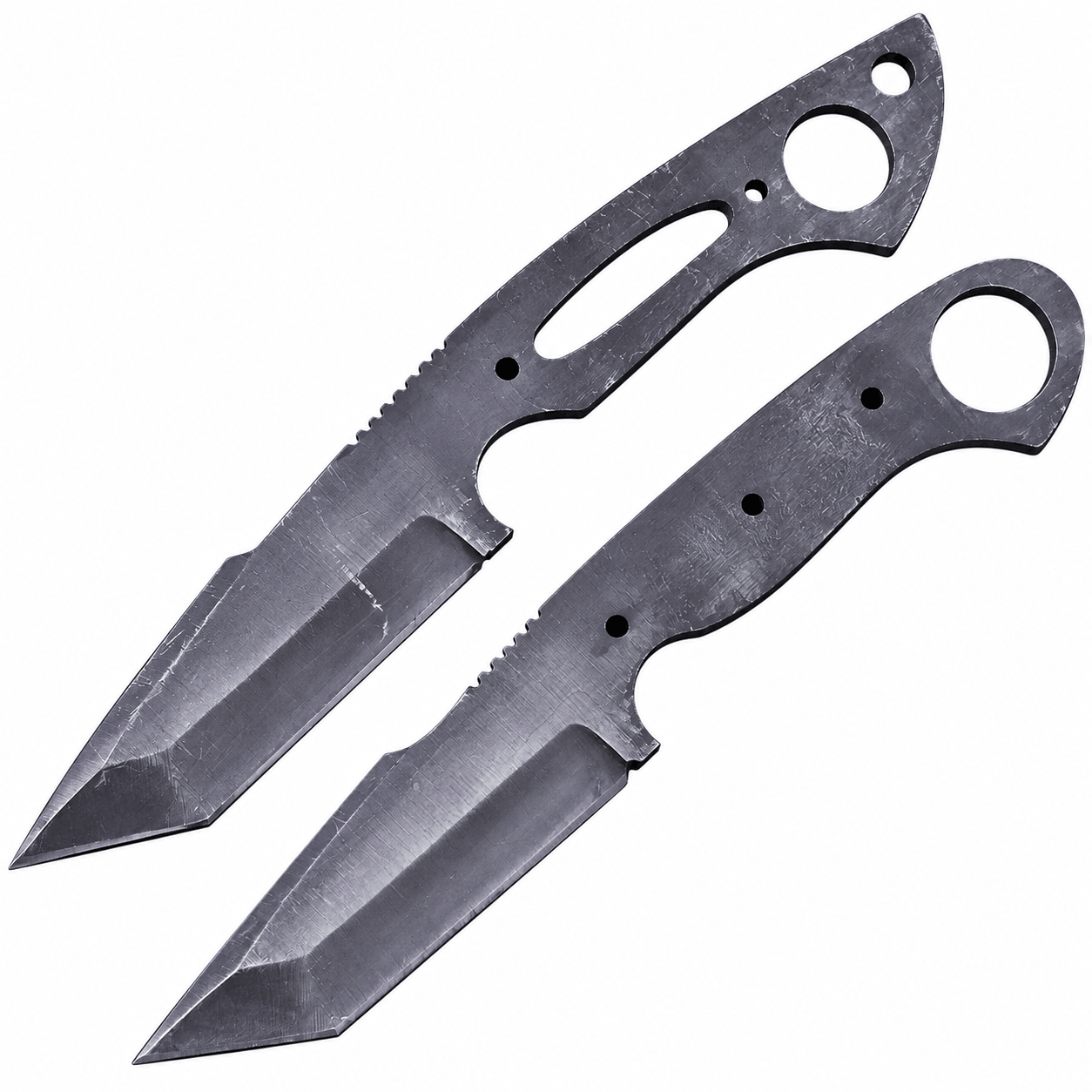
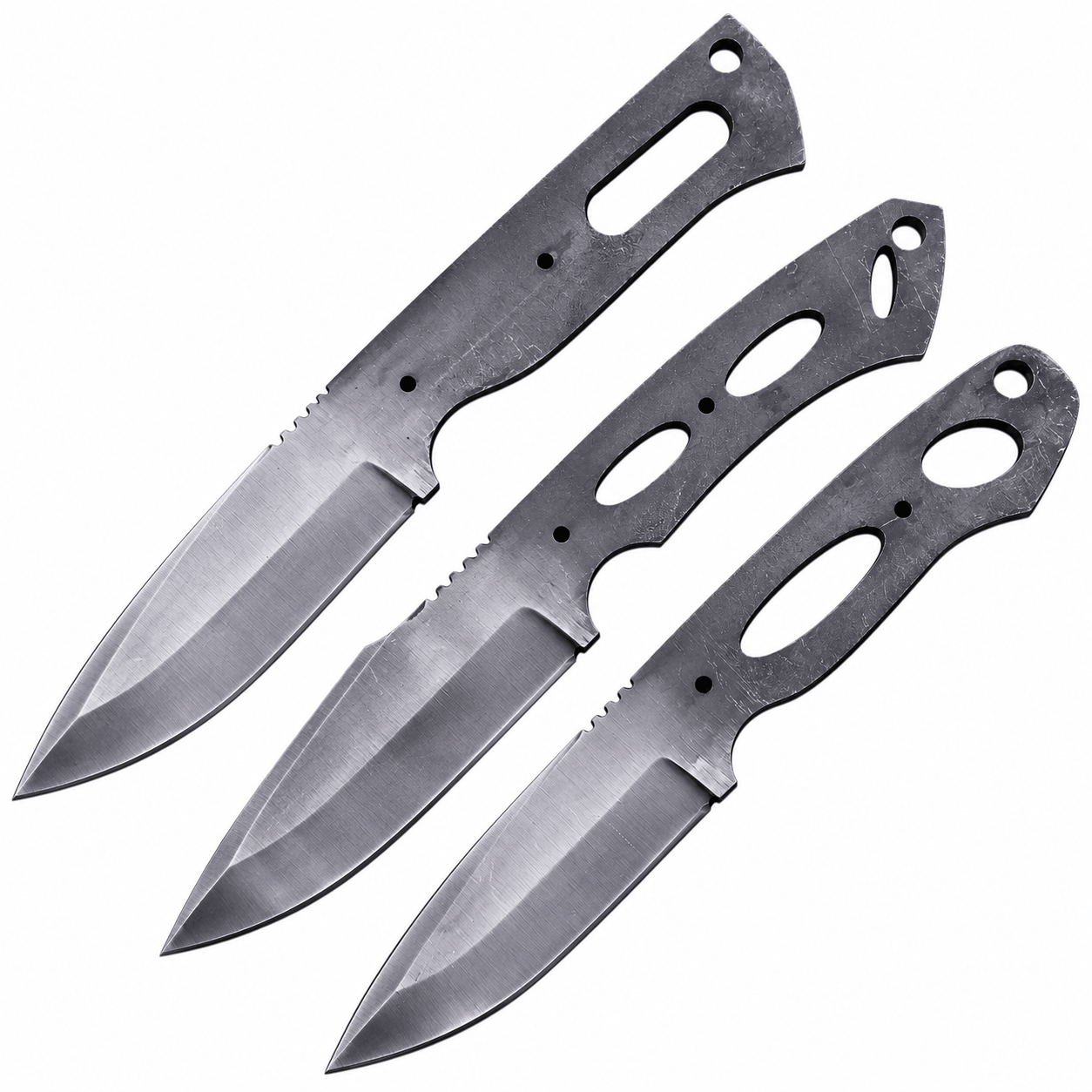
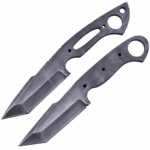
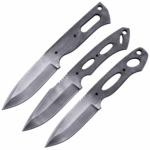
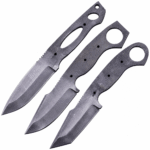
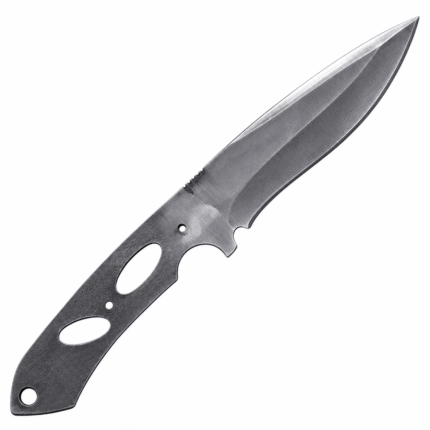
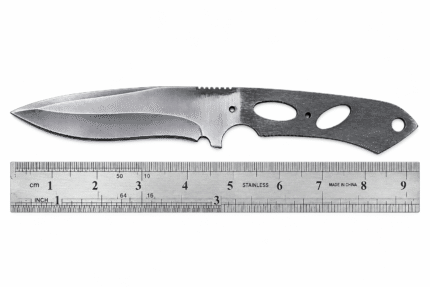
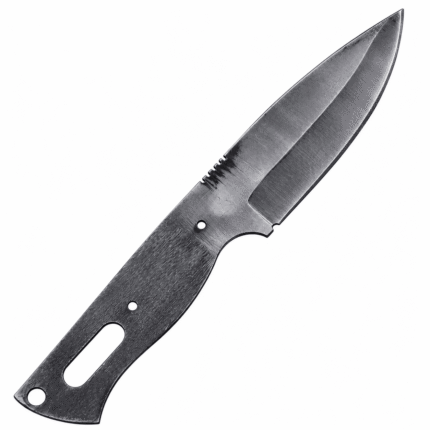
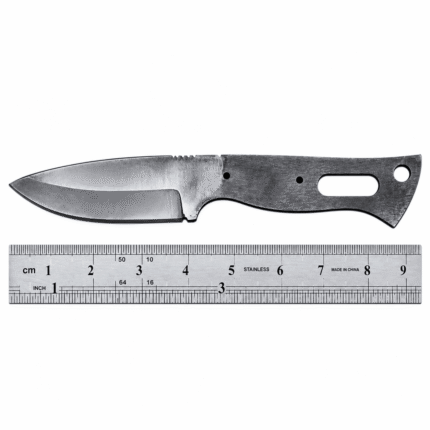
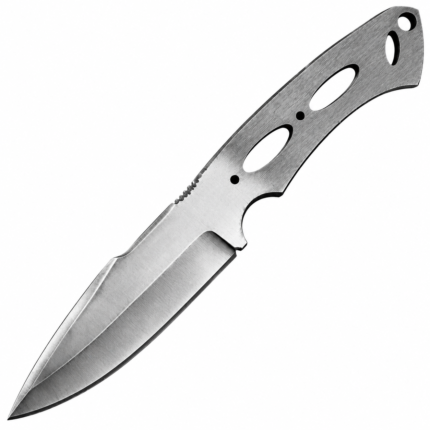
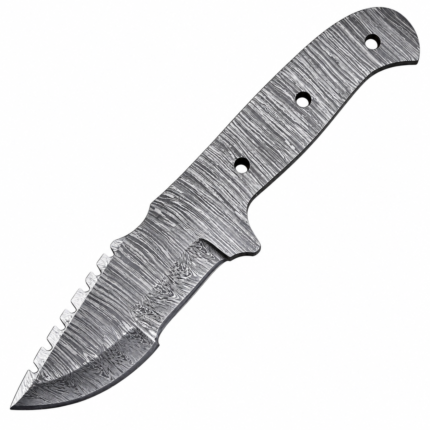
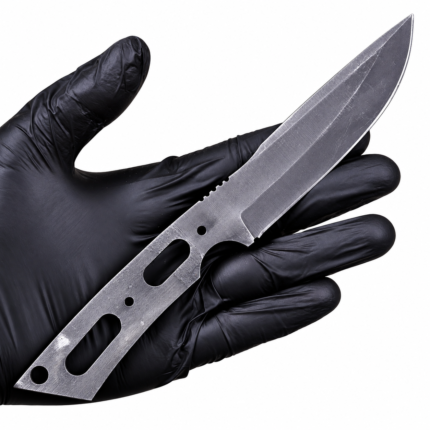
The assortment shows different handle cutouts, pin-hole arrangements, blade geometries, tip shapes, and overall silhouettes. As each blank bears its own visual character, knife makers can choose a design according to the style and intended general-purpose application of the finished product.
These blanks are ideal for workshops, custom knife brands, craft businesses, knife-making enthusiasts, and manufacturers developing personalized or private-label product collections.
Rather than starting from a completely rectangular piece of metal, makers receive a blade that has already established its fundamental profile. Further grinding, polishing, sharpening, handle installation, surface finishing, and decorative work can be achieved according to the requirements of the individual project.
What Are Full Tang Knife Blanks?
A knife blank is an unfinished or semi-finished blade form intended to become part of a completed knife after additional manufacturing or craftsmanship.
With Full Tang Knife Blanks, the metal continues from the blade into the handle area as one continuous piece, and handle scales can then be installed on either side of the tang to create the finished grip.
This approach differs from designs in which only a narrow area of metal extends into the handle.
For custom knife manufacturing, full-tang blanks are popular as the exposed handle section provides considerable flexibility for customization. Depending on the specific blank, the maker may install handle scales, pins, fasteners, decorative hardware, liners, spacers, or other finishing elements.
The skeletonized sections visible in several designs also contribute to the distinctive construction of these blanks. Various openings can be incorporated into the handle area according to the original blade pattern.
Each blank therefore serves as a starting component rather than a completely finished retail knife.
Assorted Blade Profiles
One of the main benefits of this collection is the variety of available shapes.
Rather than every blank following the same outline, these Full Tang Knife Blanks feature different blade geometries and handle configurations. The assortment may include variations in:
Blade length
Blade width
Point geometry
Cutting-edge profile
Spine contour
Handle curvature
Handle width
Finger-area shaping
Skeletonized openings
Pin-hole placement
Overall knife silhouette
This variety allows manufacturers and custom knife makers to develop multiple finished knife styles from one broader category of blanks.
Some patterns have wider blades with pronounced bellies, while others feature straighter profiles or more angular tip configurations. Handle sections likewise range from relatively simple forms to more elaborate skeletonized designs with several openings in their construction.
These differences provide greater design freedom when creating customized finished products.
Full Tang One-Piece Construction
The defining characteristic of these blanks is their full tang construction.
The steel extends continuously from the blade tip through the handle section, and there is no separate blade and handle framework at this stage of the production.
For knife makers, this provides a practical surface on which handle materials can be mounted.
Handle scales are generally positioned on both sides of the tang and shaped to complement the outline of the blank. Existing holes within the tang can also be incorporated into the final handle design depending on the construction method chosen by the maker.
The uninterrupted metal profile also means that the finished product possesses the recognizable appearance associated with many handcrafted full-tang knives.
As the blank establishes the core proportions, the craftsman can focus on refining the blade and designing the handle.
Designed for Custom Handle Installation
The handle area is intentionally unfinished as customization is one of the main purposes of Full Tang Knife Blanks.
Knife makers can select their preferred handle material according to the appearance, texture, production requirements, and desired final product positioning.
Possible handle materials may include:
Natural Wood: Hardwood scales can provide a traditional handcrafted appearance. Grain patterns vary naturally, making individual finished pieces visually distinctive.
Stabilized Wood: Stabilized materials may be selected when makers want the visual qualities of wood combined with additional manufacturing consistency.
Synthetic Handle Materials: Engineered materials can provide a contemporary aesthetic and are available in numerous textures and colors.
Composite Scales: Layered or composite materials can create contrasting patterns along the handle edges.
Resin-Based Materials: Colored or patterned resin scales can be used for highly customized visual designs.
Decorative Handle Scales: Makers can incorporate engraved, textured, patterned, laminated, or specialty materials according to their own product concept.
As the tang profile is visible and accessible, handle scales can also be shaped to closely follow the contour of the knife blank.
Skeletonized Handle Patterns
Several blanks within the collection feature prominent openings in the handle section.
These skeletonized patterns provide both functional construction options and distinctive styling options.
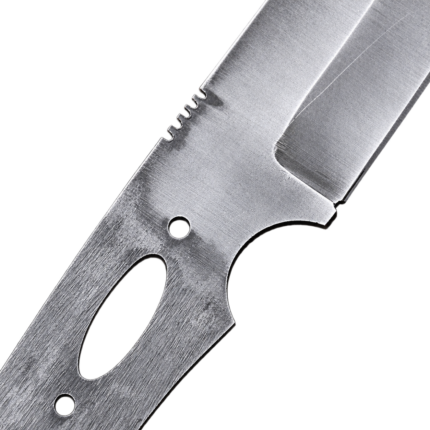
Depending on the specific model, openings may be round, oval, elongated, or irregularly shaped, and smaller pin holes may also be positioned at different points throughout the handle.
When handle scales are installed, the maker can decide whether certain openings should remain concealed, partially incorporated, or used as part of the fastening arrangement.
The differences between the skeletonized patterns mean that each blank design is visually recognizable even before handle materials are fitted.
This makes the collection particularly interesting for manufacturers who want to offer several custom knife models without using an identical base design for every product.
Ready for Further Knife-Making Processes
These Full Tang Knife Blanks should be considered manufacturing components rather than fully completed knives.
Additional processes may be required before the product reaches its final condition.
Depending on how the blank is supplied and the manufacturer’s intended finish, subsequent operations may include:
Blade Refinement
The blade geometry can be refined according to the desired profile and edge characteristics.
Surface Grinding
Grinding can be used to remove manufacturing traces and prepare the steel for a more refined finish.
Sanding
Progressive sanding is essential for improving surface consistency before final polishing or texturing.
Polishing
Makers can choose different levels of polishing according to whether the desired appearance is satin, brushed, semi-polished, or highly polished.
Handle Installation
Custom scales can be fitted, drilled, pinned, bonded, shaped, and finished around the tang.
Edge Finishing
Final edge preparation is completed according to the intended finished knife specification.
Branding
Manufacturers may add appropriate branding or identification using processes compatible with the blade material and surface treatment.
These steps allow the same basic blank to be converted into many different finished product styles.
Suitable for Handmade Knife Projects
Custom knife makers often seek a balance between complete fabrication from raw metal and assembling a fully prefabricated product.
Full Tang Knife Blanks occupy the middle ground.
The blade profile has already been established, but substantial opportunity remains for craftsmanship and customization.
This makes the blanks ideal for makers who want to dedicate more of their time to:
Handle craftsmanship
Blade finishing
Surface treatments
Product styling
Material combinations
Decorative details
Branding
Packaging
Collection development
As individual makers can finish the same blank differently, the final results can be considerably varied.
A blank fitted with traditional hardwood scales can have a completely different appearance from the same blank fitted with modern composite scales.
Surface treatment also alters the final character of the product.
Multiple Handle Configurations
The pictured assortment demonstrates how much variation is possible within the handle section.
Some blanks have a large circular opening near the top of the handle, while others feature elongated internal cutouts, multiple holes, narrow skeletonized sections, or combinations of large and small openings.
Handle edges are also shaped differently.
Certain models feature pronounced curves intended to follow the natural line of a finished grip, while other patterns are comparatively straight and minimal.
This assortment provides more options to designers when planning finished knife collections.
For manufacturers, multiple blanks can be used to develop different product series while maintaining a consistent full-tang construction philosophy.
Steel Surface Ready for Personalized Finishing
The unfinished appearance of the blade provides makers with the opportunity to determine their own final surface aesthetic.
A polished blade has a different visual impression from a brushed or satin-finished blade.
Depending on the steel specification and manufacturing process, suitable finishing methods can be selected by the craftsman.
Potential visual finishes include:
Satin Finish: A controlled linear finish commonly associated with handmade metal products.
Brushed Finish: Produces a visible directional texture and understated industrial character.
Polished Finish: Creates a brighter and more reflective blade surface.
Custom Textured Finish: Experienced manufacturers may use specialized finishing techniques according to their own production capabilities.
The unfinished nature of the blank means that the maker is not restricted to a single predetermined aesthetic.
Excellent Foundation for Custom Knife Collections
For companies planning a custom knife range, starting with several blank profiles can simplify initial product development.
A manufacturer could select different Full Tang Knife Blanks and combine them with coordinated handle materials to create a recognizable collection.
For example, a range could share:
Similar handle colors
Matching pin materials
Consistent polishing
Common packaging
Coordinated engraving
Uniform branding
While each knife maintains a different blade and handle silhouette.
This combination provides visual consistency without making every product identical.
Manufacturers developing private-label or OEM collections can also build specifications around individual blank designs.
Useful for Knife-Making Workshops
Knife-making workshops often require components that allow participants to experience meaningful craftsmanship without beginning every project from raw steel.
Pre-shaped Full Tang Knife Blanks can be useful in suitable supervised workshop environments as much of the basic outline already exists.
Participants can concentrate on processes such as handle design, material selection, fitting, sanding, polishing, and finishing under proper professional guidance.
The variety of available profiles also allows different projects to be created from the same general product category.
Professional supervision, suitable equipment, appropriate protective gear, and responsible handling should always be used during fabrication.
Designed for Craftsmen and Manufacturers
These blanks are suitable for various types of customers that are involved with knife production and metal craftsmanship.
Potential users may include:
Custom knife makers
Handmade product workshops
Metalworking businesses
Craft manufacturers
Knife-making hobbyists
OEM manufacturers
Private-label suppliers
Custom gift manufacturers
Small-scale artisan brands
Product development studios
Production requirements will naturally vary between hobby projects and commercial manufacturing.
Businesses ordering blanks for commercial use should therefore establish their preferred dimensions, material specification, surface condition, tolerances, heat-treatment requirements, and other manufacturing details before placing larger orders.
Customization Opportunities
The blank is only the starting point.
Many aspects of the finished knife can potentially be customized during subsequent manufacturing.
Handle Material
Choose materials that complement the intended style of the finished product.
Handle Shape
Scales can be contoured and rounded to develop a comfortable finished grip.
Handle Thickness
The grip thickness can be adjusted according to the scale material and project requirements.
Pin Configuration
Existing holes can accommodate appropriate fastening methods depending on the selected design.
Blade Finish
Choose between polished, brushed, satin, or other appropriate surface treatments.
Branding
Manufacturers can add suitable logos, model references, or identifying marks where appropriate.
Packaging
Finished products can be paired with customized boxes, sleeves, pouches, or other retail packaging depending on the brand’s positioning.
These customization possibilities are one reason that Full Tang Knife Blanks are useful for independent makers as well as established manufacturers.
Suitable for OEM and Private Label Development
Businesses developing branded knife collections often require flexibility in appearance and specification.
Full tang blanks provide a base from which manufacturers can create several branded variations.
Depending on available manufacturing services, potential OEM or private-label customization may include:
Custom blade profile
Custom blank dimensions
Handle-hole layout
Blade thickness specification
Surface finish
Handle material
Handle color
Pin selection
Engraved branding
Laser marking
Custom packaging
Product labels
Retail presentation
Exact options depend on production capability and order requirements.
For bulk manufacturing projects, technical specifications should be approved before production begins.
Why Choose Full Tang Knife Blanks?
There are several practical reasons that a maker may prefer to start with a pre-shaped blank.
Reduced Initial Fabrication
The basic blade and handle outline is already formed meaning that there is less profiling to do compared with starting from raw rectangular steel.
Greater Creative Freedom
The blank remains sufficiently unfinished for makers to apply their own handle materials, finishing techniques, and visual identity.
Multiple Designs
A varied assortment allows users to experiment with different blade and handle configurations.
Suitable for Small or Large Projects
Blanks can support individual handcrafted projects as well as organized manufacturing workflows.
Consistent Starting Point
Using repeatable blanks can help manufacturers develop standardized product models.
Branding Potential
Finished products can be incorporated into private-label or custom brand collections.
Together, these characteristics make Full Tang Knife Blanks a versatile manufacturing component.
Product Appearance
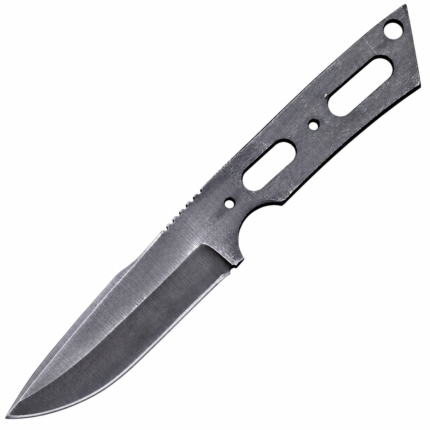
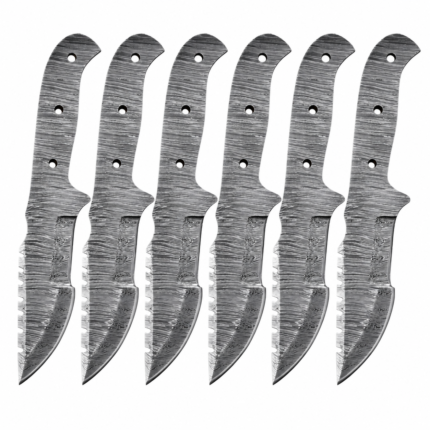
The collection pictured features exposed metallic surfaces with visible fabrication marks consistent with unfinished knife blanks.
This is important as customers should not expect every blank to arrive with the same appearance as a completely polished retail knife.
Minor marks, grinding traces, surface variations, or manufacturing indications may be present before final finishing.
Such characteristics are generally addressed during subsequent sanding, grinding, polishing, or surface-treatment processes.
The final appearance therefore depends substantially on the finishing work performed by the maker.
Product Specifications
Product Type: Unfinished knife blanks
Construction: Full tang
Configuration: One-piece blade and handle profile
Handle Style: Skeletonized / drilled tang designs
Blade Profiles: Assorted designs
Finish: Unfinished or semi-finished manufacturing surface
Customization: Suitable for custom handle scales and finishing
Applications: Custom knife making, craft production, OEM development, private-label manufacturing
Handle Compatibility: Wood, composite, synthetic, resin, and other appropriate scale materials
Branding Options: Custom marking may be available depending on production requirements
Order Options: Individual or bulk quantities depending on supplier availability
As dimensions and steel specifications can vary between models, exact technical measurements should be confirmed for the selected blank before ordering.
Ideal for Developing Distinctive Handmade Products
Handmade products are often valued as the materials and finishing choices allow makers to give each piece individual character.
These Full Tang Knife Blanks provide that opportunity without forcing craftsmen to begin every project with an unshaped piece of steel.
A maker can choose one profile and create multiple variations by changing only the handle material.
Alternatively, several different blanks can be finished with the same handle material to form a coordinated series.
The combination possibilities are extensive.
Traditional wood can produce a classic appearance, while layered composites can create a modern visual effect. Dark handle materials can contrast with polished steel, while lighter materials can produce a cleaner, more understated look.
The final product identity is therefore largely determined by the craftsmanship applied after the blank stage.
Bulk Supply for Manufacturing Requirements
For commercial buyers, consistent supply can be particularly important.
Manufacturers purchasing Full Tang Knife Blanks in bulk may require specific tolerances, repeatable dimensions, designated steel grades, controlled surface conditions, or customized profiles.
Before bulk manufacturing, it is advisable to finalize key specifications including:
Overall length
Blade length
Blade thickness
Handle length
Tang shape
Hole dimensions
Pin placement
Blade profile
Steel specification
Surface condition
Heat-treatment requirements
Quantity
Branding requirements
Packaging requirements
Establishing these details helps ensure that future batches match the intended product specification.
Samples or prototypes can also be evaluated before larger manufacturing runs where appropriate.
Custom Blade Shapes for Brand Development
Businesses are not necessarily limited to standard profiles.
Where custom manufacturing is available, a brand may provide its own dimensions, sketches, CAD drawings, reference designs, or technical specifications for developing unique knife blanks.
Custom designs can help distinguish a product range from generic alternatives.
The handle geometry can also be developed alongside the blade profile to accommodate selected scale shapes or branding concepts.
For professional manufacturing, technical drawings should include sufficient dimensional information to minimize interpretation during production.
Once the design has been approved, the resulting blank can become the foundation for a repeatable branded model.
Quality Considerations
The performance and finish of any completed knife depends on numerous factors beyond the visible shape of the blank.
These may include the steel specification, manufacturing process, heat treatment, grinding, edge geometry, handle installation, fastening system, finishing quality, and ongoing care.
For this reason, buyers purchasing blanks for professional manufacturing should confirm all relevant material and processing details with the supplier.
A visually similar blank can perform differently according to its metallurgy and manufacturing history.
When producing commercial finished products, appropriate quality-control procedures should therefore be incorporated throughout the manufacturing process.
A Versatile Starting Point for Custom Craftsmanship
Whether the objective is producing a single personalized project or developing a broader product collection, Full Tang Knife Blanks give makers a practical starting point.
Their one-piece construction, assorted profiles, skeletonized handles, and customizable surfaces provide substantial creative flexibility.
Rather than determining the final style, the blank establishes the underlying geometry while leaving important aesthetic decisions to the craftsman.
Handle scales, hardware, polishing, finishing, engraving, and packaging can all influence the final result.
This makes the blanks ideal for brands that value customization and makers that prefer to put their own craftsmanship into the finished product.
For businesses, the ability to standardize the underlying blank while varying surface treatments and handle materials can also support efficient product development.
For individual craftsmen, each profile offers a new opportunity to experiment with materials and finishing techniques.
From classic wooden handles to contemporary composites, the final design can be adapted around the intended appearance of the completed product
Reviews
There are no reviews yet.